Júlíus
Operation NapoleonJúlíus is the leader of an Icelandic rescue team whose work on Vatnajökull Glacier brings it into the path of an armed American military operation. First responsible for getting two injured men off the ice, he becomes the team’s spokesman in a confrontation that reveals how sharply rescue work and military control have collided. His insistence on continuing is met not with negotiation but with gunfire directed at the team’s vehicle.
Identity and Responsibilities
Júlíus leads a team of about seventy rescuers, men and women who travel across the glacier on skis, snowmobiles and tracked vehicles. The scale of the group matters: this is not a lone expedition but an organized civilian rescue effort, moving people and equipment through a dangerous landscape. Júlíus coordinates that effort while weighing immediate medical needs against the hazards of the storm and the possibility of encountering armed soldiers.
When Steve reaches him by telephone, the team has found Jóhann’s badly battered body in a crevasse and Elías in the same crevasse, still showing signs of life. Elías’s condition is so poor that Júlíus can offer little hope that he will survive. The team is heading back to camp and expects a Defense Force helicopter, but it is uncertain whether it can get there before the storm arrives. His account is direct about the danger and the limits of what the rescuers can do; recovery depends in part on reaching the injured men and getting them transported to town.
From Rescue to Search
Kristín tells Júlíus that Elías and Jóhann were not victims of an accident: she believes American soldiers took them captive and threw them into the crevasse. She locates the soldiers and a plane somewhere in the southeastern section of the glacier, based on information from an old pilot who once carried out surveillance flights there. Júlíus is therefore receiving a serious but contested account while his team is already engaged in the urgent task of bringing the injured men back.
The team has seventy members, but Júlíus sets out its priorities in sequence: first, Jóhann and Elías must be airlifted to town; only then can the rescuers begin looking for the soldiers. A Defense Force helicopter is expected, while the Icelandic Coast Guard helicopter is unavailable. The distinction between rescue and pursuit is practical as well as moral: the immediate duty is to people whose lives may still be saved, even as the information about armed men on the glacier makes the later search dangerous.
In a subsequent call, the rescue effort is given a more precise warning. The American soldiers are thought to be roughly ten to fifteen kilometres from the glacier’s edge, directly above the farm of Brennigerdi, and are digging a German plane out of the ice. They are armed and may be extremely dangerous. The rescuers are at the foot of the glacier and intend to climb up from that side, hoping to meet the others there. The information places Júlíus’s team in a widening operation: it is still seeking injured people, but the search now carries the possibility of a direct encounter with the soldiers.
The Standoff on the Glacier
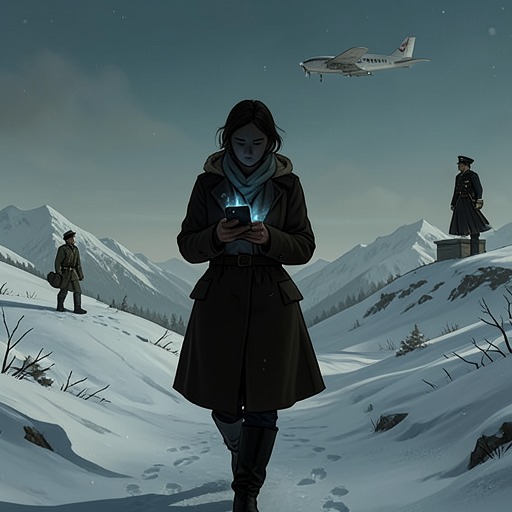
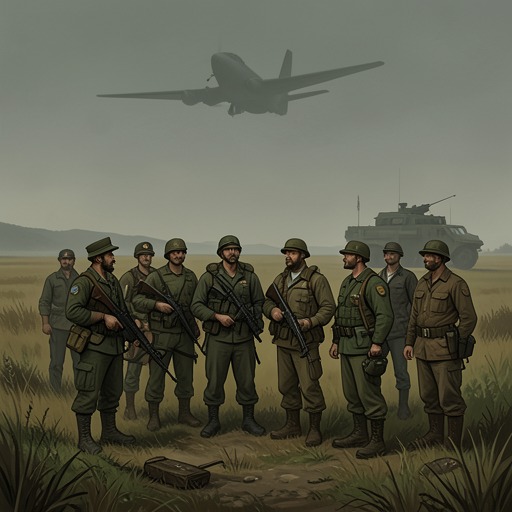
At 23:15 GMT on Saturday 30 January, Júlíus sees about twenty soldiers approaching on snowmobiles, their powerful headlamps cutting through the darkness. Helmets and goggles conceal their faces; rifles are slung over their backs. His own much larger team advances on skis, snowmobiles and two tracked vehicles. Júlíus signals for the rescuers to slow down, and they stop about ten metres from the waiting troops.
The arrangement makes the unequal terms of the meeting visible. The soldiers wear Arctic camouflage and carry automatic weapons and revolvers; the rescuers are unarmed, their luminous orange jackets designed to make them visible in the snow. Júlíus orders his team to stay with the vehicles while he goes forward to speak. One soldier dismounts to meet him, and the others follow. The officer’s face remains difficult to see behind his goggles, even after he lowers his scarf. The encounter is close enough for conversation, but the obscured faces and surrounding weapons deny it the ordinary openness of a meeting between two groups.
Júlíus and the officer stand facing one another in the northerly wind. The volunteers remain behind their leader, showing no sign of fear. Júlíus announces that the team will carry on, then turns back towards his people. He does not see the officer signal to a soldier nearby. That soldier removes his rifle, kneels to fire, and shoots at the tracked vehicle in front of Júlíus. Its grille and bonnet are punctured; flames rise from the engine, an explosion sends the bonnet onto the roof, and the rescuers inside force open the doors and crawl clear. The burning vehicle lights the winter darkness before the shooting stops.
Consequences and Narrative Significance
Júlíus throws himself onto the ice during the volley. When he rises, stunned, the young officer approaches again, while the soldiers cover the rescue team with their weapons. The officer demands the team’s mobile phones, radios and emergency flares. Júlíus looks at the burning wreckage and at rescuers who have escaped the vehicle or remain uncertain beside their snowmobiles. At fifteen degrees below zero, he can feel the heat of the fire. The scene turns equipment meant to sustain a rescue into the focus of an armed effort to disarm the rescuers.
The attack also changes the emotional register of Júlíus’s leadership. He has no prior experience of military force or weapons used in combat. His anger at being confronted gives way, briefly, to apprehension about what may happen to his team. The text does not resolve the confrontation in this episode; it ends with the rescuers facing armed soldiers and the officer’s demand. Júlíus’s role in the encounter is defined by the contrast between the work his team came to do and the force used against it: they arrive conspicuous and unarmed to rescue people, while the soldiers’ weapons and camouflage establish a different claim to the glacier.